
March 28, 2026: Major Indices At Six-Month Lows
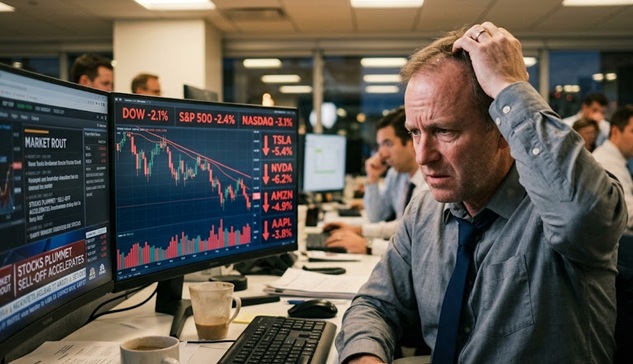
Last week, Dow Jones fell 0.9%, S&P 500 lost 2.1%, Nasdaq composite was down 3.2%. SpaceX could be preparing a record-breaking IPO filing to raise over US$75 billion, at a US$1.25 trillion valuation. Anthropic is considering a Q4 IPO at a US$60 billion valuation, while readying its high-performance “Claude Mythos” model. OpenAI is nearing a US$10 billion raise at a US$120 billion valuation, bolstered by surpassing US$100 million in annualized revenue from its new ads pilot. Salesforce and HubSpot shares fell after reports that AWS is automating sales functions with AI. Meta established audacious executive incentives tied to a US$9 trillion market cap goal. Amazon acquired Fauna Robotics. China’s Unitree filed for a US$610 million IPO. Google accelerated its “Q Day” deadline to 2029, urging a faster transition to post-quantum cryptography. Meta and OpenAI committed to Arm’s first AI server chip to reduce dependence on Nvidia. SK Hynix pledged US$8 billion for advanced ASML gear. A jury found Meta and YouTube liable for social media addiction in a landmark “bellwether” case. U.S. senators proposed a ban on sports betting within prediction markets, targeting platforms like Kalshi. The EV sector saw a major setback as Sony and Honda canceled their “Afeela” joint venture. Xanadu gained 15% in its TSX and Nasdaq debut, marking the first pure-play photonic quantum IPO. In other Canadian news, Sophic client Juno Industries, a “neo-prime” defense startup, chaired by former Canadian defense minister, Harjit Sajjan, is raising US$7 million, and going public. The company also launched “Polar Nexus” for Arctic surveillance. Sophic client, Hybrid Power Solutions secured a $200K repeat order for its Spark Cube system from a major Canadian transit commission. Sophic Client, Boardwalktech announced a $1.5 million private placement.
Canadian Technology Capital Markets & Company News
Sophic Client Juno Industries: Canada Ex-Defense Minister’s startup Juno sees Anduril-type role.
A defense technology startup chaired by Canada’s former defense minister is raising funds while the country rapidly rearms, and launched its first product aimed at Arctic security. Vancouver-based Juno Industries Inc. hopes to close a Series A round of about $10 million (US$7.2 million) by mid-April, Chief Executive Officer Hunter Scharfe said in an interview. The startup “will probably be doing another round quite quickly after that” to fund testing, hiring and facilities, he said. Scharfe’s co-founder and executive chairman is Harjit Sajjan, who was Canada’s defense minister from 2015 to 2021, and before that served as an officer in the Canadian Armed Forces. Juno, founded last April, will announce on Friday it’s developing a hub for communications, drones and sensors in Arctic environments called Polar Nexus, which Scharfe said will be “the first of many sensor nodes and deploy platforms” from the company. It will be made in partnership with Critical Infrastructure Technologies Ltd. Juno’s ambition is to be a “neo-prime,” a term used for fast-growth startups like Anduril Industries Inc. that are racing with the traditional “prime” defense contractors like Lockheed Martin Corp. to deliver new security technology. Juno is in talks with the armed forces, Sajjan said in the interview. A former commander of the Royal Canadian Air Force, Michael Hood, is an adviser to the company. “Autonomous systems are going to become the forefront of defense investment,” and “those systems are very powerful and have a lot of different data capabilities,” Scharfe said. But the issue, he said, is what platform will be trusted to trawl through the data, interpret it, and provide officials options for action. “Juno absolutely wants to be that platform,” Scharfe said. The company has about 20 employees today and Scharfe said it may double over the coming weeks. He has looked in part to the rapid growth of companies like Anduril, as well as Palantir Technologies Inc., citing the latter’s Maven artificial intelligence system, which as been embraced by the Pentagon. Juno also describes its mission as reestablishing “Canadian dynamism,” which echoes the name of the “American Dynamism” team at US venture capital firm Andreessen Horowitz, which funds so-called “national interest” projects. Juno is positioning itself to benefit from a wave of money headed for Canadian defense businesses. On Thursday, Prime Minister Mark Carney said the government hit its North American Treaty Organization target to spend 2% of gross domestic product on defense, and he has pledged to buy more military gear in Canada and less from US suppliers. He has committed with the rest of NATO to increase the spending to 3.5% of GDP, with another 1.5% on related infrastructure, by 2035. A major part of that spending will go toward defending Canada’s far north, as polar ice melts and the region becomes more contested. Juno is named after the codename for the beach where Canadian troops landed on D-Day in the Second World War — “a seminal moment of Canadian identity and sovereignty,” and “a reminder of great Canadian ambition and fearlessness,” said Scharfe, who was previously an adviser to quantum firm BTQ Technologies Corp. Juno is not the only startup vying to serve a fast-militarizing Canada: In January, a Toronto-based rival called Dominion Dynamics Inc. raised $21 million, backed by Canadian tech leaders. https://tinyurl.com/mtrna88j
Sophic Client Juno Industries announces development of Arctic-ready autonomous platform ‘Polar Nexus’.
Canadian defence technology company Juno Industries announced plans to develop and deploy an Autonomous Nexus System ‘Polar Nexus’ (the “Polar Nexus Platform”) in partnership with Critical Infrastructure Technologies Ltd. (“CiTech”), through a joint venture. Juno Industries and CiTech will co-develop and commercialize Polar Nexus for modern-day surveillance deployments, enhancing communications in extreme-environment conditions, with an initial focus on the Arctic. With the Canadian government’s recent $35 billion investment into Canada’s far North, paired with the region’s growing role in the global defence environment, Polar Nexus aims to deliver critical capabilities for arctic readiness, including long-range communications and persistent integrated sensor capabilities for ISR (Intelligence, Surveillance, and Reconnaissance) and threat detection. The Polar Nexus Platform has been designed to provide a new set of operational advantages. Polar Nexus is anticipated to be fully mobile, autonomous, and payload agnostic. The dual-use technology can support continuous communication, emergency responsive coverage, optical surveillance, assists with real-time imaging, geological reconnaissance, and offers greater range, accuracy, and payload capacity. “With the assumptions that have long shaped Canadian defence now fundamentally shifting, new developments are urgently needed to enable effective military deployments, secure sovereignty in the region, and ensure a sustained presence in the North,” said Hunter Scharfe, CEO of Juno Industries. “The Polar Nexus Platform is being developed to support communications and surveillance needs that align with current-day and future assumptions, and will support critical modernization efforts in Canada’s far North and other extreme environments,” continued Scharfe. The Polar Nexus Platform is being developed from a proven Nexus Platform with international commercial deployments. Juno Industries, in partnership with CiTech through the Joint Venture, will co-develop Polar Nexus to optimize and test capabilities for Arctic conditions. https://tinyurl.com/mry6nvb5
Sophic Client Hybrid Power Solutions (HPSS-CSE, HPSIF-OTC) secures $203,000 order from Canada’s largest transit commission.
Hybrid Power has secured a $203,000 order from a major Canadian Transit Commission. The order includes Hybrid’s flagship Spark Cube portable power system, along with custom accessories and add-ons designed to support sustainable, off-grid energy needs in urban transit operations. “This repeat and consistent ordering by a major Canadian Transit commission exemplifies the flexibility of HPS’s service and product offering. Working directly with these high-profile clients has allowed us to identify new product fit and solve high value problems,” said Francois Byrne, CEO of Hybrid Power Solutions. “This order not only validates the versatility of our Spark platform in delivering power according to the exacting specifications of highly variable needs of a transit system, but also demonstrates how municipalities can transition to greener energy without compromising performance.” The deployment of this system is expected to support the transit operator’s sustainability goals, including enhanced energy resilience for remote or temporary sites, reduced reliance on traditional generators, and integration with electric vehicle charging across the public transit network. https://tinyurl.com/3punyrup
Sophic Client Boardwalktech, Inc. (BWLK-TSXV, BWLKF-OTCQB) announces Non-Brokered Private Placement.
Boardwalktech announces that it intends to proceed with a non-brokered private placement (“the Offering”) of up to 42,857,143 units (the “Units”) at a subscription price of C$0.035 per Unit, for gross proceeds of up to C$1,500,000. Each Unit will consist of one common share (“Common Share”) and one Common Share purchase warrant (“Warrant”). Each Warrant will entitle the holder to purchase one Common Share at an exercise price of C$0.05, for a period of two years from the date of issuance. In connection with the Offering, the Company may elect to pay finder’s fees to eligible finders, and details of any finder’s fees paid will be announced at a later date. Completion of the Offering is subject to the approval of the TSX Venture Exchange. The Units will be issued pursuant to exemptions from the prospectus requirements in accordance with National Instrument 45-106 respecting Prospectus Exemptions. The securities issued pursuant to the Offering will be subject to a hold period of four months plus one day from the date of issuance. Insiders may participate in the Offering, and details of any insider participation will be announced at a later date.. https://tinyurl.com/3mzzc8wf
Xanadu makes solid debut as it begins trading on TSX and Nasdaq.
Toronto quantum computing firm Xanadu Quantum Technologies has officially gone public, and investors today have reacted favourably. Xanadu began trading on the Toronto Stock Exchange (TSX) and Nasdaq on Friday under the ticker XNDU. The firm began trading on the Nasdaq at US$10 per share and by market close its stock was up 15 percent, to US$11.50. This is a strong gain compared to broader market turmoil—conflict in the Middle East helped drag the Nasdaq index down nearly five percent through the week ending Friday. Xanadu’s debut on the TSX, meanwhile, makes it the first Canadian technology company to debut on the exchange since 2021. The firm’s debut also makes it the first pure-play photonic quantum computing business to go public. Xanadu achieved this by merging with Philadelphia-based special purpose acquisition company (SPAC) Crane Harbor Acquisition Corp. Xanadu announced today that the SPAC transaction gives it approximately US$302 million in gross proceeds, much lower than the up-to-US$500 million it initially estimated when the US$3.6-billion deal was first announced in November. Xanadu is also in talks with the Canadian and Ontario governments regarding funding to establish advanced semiconductor and photonic manufacturing capabilities in Canada. The company says up to $390 million in combined support is under consideration. https://tinyurl.com/55m7b32w
Spark Microsystems secures additional $17 million in Series B funding.
Montréal-based fabless semiconductor company Spark Microsystems has closed another $17 million in Series B follow-on financing. “We chose to extend our Series B with existing investors because they already have deep conviction in our technology.” Spark, which specializes in next-generation short-range wireless communications, will use the funding to continue commercializing its patented, low-energy ultra-wideband (LE-UWB) tech. Spark’s LE-UWB transceivers provide high-speed, low-latency, and energy-efficient data transfer. The firm claims its tech can facilitate short-range wireless communications faster, using less power than alternatives like Bluetooth and Wi-Fi. Its latest equity, all-primary round, which Spark announced on Monday, was co-led by Montréal’s Idealist Capital and Real Ventures, with participation from fellow existing investors Cycle Capital, ND Capital, and Export Development Canada. This financing closed in February and came at the same terms and undisclosed valuation as Spark’s initial, $34 million Series B from March 2023. It brings Spark’s total funding to more than $70 million. https://tinyurl.com/5cdxxw2s
Miraterra announces $16 million to advance its soil measurement tech.
Vancouver-based AgTech company Miraterra has secured a $16 million seed extension to refine its soil measurement technology and bring it to more customers. Over the past three years, the independent Terramera subsidiary has expanded from a Digitizer (a digital microscope that took soil readings using Raman spectroscopy—a chemical analysis technique that uses light) to a more comprehensive soil measurement platform spanning satellite chemistry and biology, thanks in part to a recent acquisition, CEO Nate Kelly said. https://tinyurl.com/mr6sueum
Chexy raises $14 million Series A led by Khosla Ventures.
Chexy has raised a $14 million Series A round to fund its expansion from helping tenants earn credit card rewards into supporting more everyday expenses, including business payments. The round was led by Khosla Ventures, one of Silicon Valley’s most reputable venture firms, which has backed giant tech companies like OpenAI, DoorDash, Stripe, and Instacart. Returning investors such as Crossbeam, Venrex, and Air Canada, which partnered with Chexy for its Aeroplan program, also participated in the round. Chexy remains Canadian-controlled, with no immediate plans to expand into or serve the US market. Launched in 2023, Chexy initially focused solely on helping tenants earn credit card rewards through rent payments. https://tinyurl.com/446dujer
Cohere teams up with Swedish defence firm Saab on AI for surveillance jets.
Toronto-based large language model developer Cohere has signed a memorandum of understanding (MOU) to collaborate with Swedish aerospace and defence contractor Saab. Saab announced the MOU yesterday. The agreement establishes a framework for advanced AI collaboration in support of Saab’s GlobalEye surveillance jet. The two companies plan to explore partnering to embed Cohere’s AI into Saab’s GlobalEye offering. https://tinyurl.com/2cykphwf
Global Markets: IPOs, Venture Capital, M&A
Anthropic discusses Q4 IPO, preps ‘Claude Mythos’ advanced AI.
Anthropic is discussing an initial public offering that could happen as soon as the fourth quarter of this year. Bankers vying to take the company public have said it could raise as much as US$60 billion, the report said. Meanwhile, Anthropic on Thursday said it was preparing to release Claude Mythos, its next flagship AI model. An Anthropic spokesperson told Fortune that Mythos represented “a step change” in AI performance and was “the most capable we’ve built to date.” The statement came after Fortune reported on an unreleased blog post from Anthropic, which referenced Mythos and said the model carried “unprecedented cybersecurity risks.” (Companies usually evaluate prereleased models for such risks and can tweak them to lower the risk.) The unpublished post said select customers are currently testing Mythos, but it isn’t clear if that has happened yet. The post also said Mythos was expensive to run, the report said. Archival OpenAI is trying to release its own new flagship model, codenamed Spud, after completing so-called pretraining work on it. The unreleased Anthropic blog post also described a new model “tier” called Capybara, which Anthropic says is “larger and more intelligent than our [flagship Claude] Opus models—which were, until now, our most powerful,” according to Fortune. It isn’t clear if there is a difference between Mythos and Capybara or if the names are related to the same underlying model. “Compared to our previous best model, Claude Opus 4.6, Capybara gets dramatically higher scores on tests of software coding, academic reasoning, and cybersecurity, among others,” the company said in the blog, the Fortune report said. https://tinyurl.com/jyzfh8px
SpaceX aims to file for IPO as soon as this week.
SpaceX is aiming to file its initial public offering prospectus with regulators later this week or next week, according to a person with direct knowledge of the plans. The confidential filing will formalize the IPO plans for Elon Musk’s rocket and telecom company as it targets a June public listing. The offering will test investor appetite for what is gearing up to be the biggest U.S. IPO of all time—by a wide measure. Advisers involved in the preparation predict the company could try to raise more than US$75 billion in the IPO, higher than a previously reported estimate of US$50 billion, according to the person. The company, last valued at US$1.25 trillion, won’t decide the actual size of the offering and a valuation until a few weeks before the IPO. Such a large deal would surpass all money raised by U.S. IPOs last year, according to Renaissance Capital. SpaceX’s filing may show it losing money after absorbing Musk’s AI firm, xAI, for US$250 billion last month. But many investment firms are reluctant to bet against Musk, who has a devoted fan base of individual investors. Musk has been especially committed to allowing individual investors to buy into the IPO, said the person. For typical IPOs, banks typically limit 10% of shares sold in the IPO to individual investors. But with SpaceX, this portion is expected to be considerably higher. The individual investor portion might exceed 20%, but the percentage has yet to be finalized, said two people involved in the deal. These individuals could include smaller investors who buy shares through brokerages such as Robinhood, as well as wealthy clients of banks. The company will not have the standard six month lockup period that is typical for most IPOs. That rule prevents insiders from selling shares all at once, depressing a stock price. SpaceX has raised so much money—an estimated $10 billion—over its two decades as a private company that its advisers want to prevent a massive dump of shares. The custom arrangement is still being sorted out, the person added. It’s not clear whether that will force investors to wait longer than normal or sell earlier. https://tinyurl.com/2xpdneab
SpaceX IPO bankers will forgo coveted ‘Lead Left’ position.
SpaceX is likely to list the investment banks that are advising it on its mega initial public offering in alphabetical order on the prospectus, according to three people familiar with the process. That’s a departure from the norm, where the most senior bank is listed first on the filing in what is known as the “lead left” position. It’s another sign of how the size of the IPO—which could be as much as $75 billion—is running against the norm for most IPOs. Bankers from Goldman Sachs, Morgan Stanley, Bank of America, JP Morgan and Citi have all been preparing the IPO plans, even though they haven’t been officially hired. In another unusual move, SpaceX has also discussed dividing up roles, say to focus on selling shares to individual investors in the U.S. and overseas. It’s also enlisting several international investment banks to find buyers. https://tinyurl.com/2xpdneab
Space stocks rally on report of spaceX IPO filing.
Shares of US space companies rose Wednesday after The Information reported Tuesday night that SpaceX is aiming to file its initial public offering prospectus with regulators as soon as this week. The report said that advisers involved in the preparation predict the company could try to raise more than US$75 billion in the IPO, higher than a previously reported estimate of US$50 billion. Telecom company EchoStar, which owns SpaceX stock, rose more than 10% while satellite company GlobalStar, which doesn’t, jumped more than 20%. Shares of Sidus Space, Satellogic and Intuitive Machines rose nearly 20%, while Rocket Lab, AST SpaceMobile and Planet Labs each climbed more than 10%. https://tinyurl.com/5n7dzmxk
OpenAI set to raise US$10 billion From MGX, Coatue, Thrive.
OpenAI is nearing a deal to raise about US$10 billion from venture investors, according to people familiar with the matter, bringing the total haul from its latest funding round to more than US$120 billion. In an interview Tuesday on CNBC, OpenAI Chief Financial Officer Sarah Friar confirmed that the company was tapping investors for the additional funds. Andreessen Horowitz, Abu Dhabi’s MGX, D.E. Shaw Ventures, TPG and T. Rowe Price will co-lead the financing, which is set to close next week, the company told Bloomberg Tuesday. https://tinyurl.com/454p7wsp
OpenAI sweetens private equity pitch amid enterprise turf war with Anthropic, sources say.
ChatGPT maker OpenAI is offering private-equity firms a sweeter deal than rival Anthropic as both artificial intelligence companies court buyout firms to form joint ventures aimed at raising fresh capital and accelerating adoption of enterprise AI products, according to people familiar with the talks. OpenAI is offering private-equity firms preferred equity stakes with a guaranteed minimum return of 17.5%, significantly higher than typical preferred instruments, two people familiar with the matter said. It is also offering early access to its newest AI models as it seeks to enlist investors such as TPG and Advent for its joint venture, three sources said. The company has recently doubled down on enterprise, an area where Anthropic has historically been stronger. By comparison, Anthropic’s enterprise-focused private-equity deal offered no such returns, the sources added. OpenAI and Anthropic are competing for partnerships with buyout firms that would allow them to quickly roll out their AI tools to potentially hundreds of private, established companies owned by buyout firms. This would boost the adoption of their models and encourage customer stickiness at scale. https://tinyurl.com/5dfx37dm
Physical Intelligence said to discuss US$11 billion valuation.
Robotics startup Physical Intelligence is in talks to raise roughly US$1 billion in a round that would value the company at over US$11 billion including the investment, according to a Bloomberg report Friday. Founders Fund is participating in the round, and Lightspeed Venture Partners, Thrive Capital and Lux Capital are in talks to invest, the report said, though deal talks are early, and the terms and investors could change. If it closes, the investment would double the startup’s valuation; it last raised US$600 million at a US$5.6 billion valuation, including the investment, in November. Alphabet’s CapitalG led that round while existing investors Lux Capital, Thrive Capital and Jeff Bezos participated. The company makes large artificial intelligence models to power robots. It was founded two years ago by former Google employees; professors from Stanford University and the University of California, Berkeley; and early Stripe employee and venture capitalist Lachy Groom. https://tinyurl.com/ysmm4z99
Humanoid maker Unitree seeks to raise US$610 million in Shanghai IPO.
Chinese robotics startup Unitree, one of the world’s largest humanoid makers, has filed for an initial public offering in Shanghai, looking to raise 4.2 billion yuan (US$610 million). In the filing submitted last Friday, Hangzhou-based Unitree disclosed that its operating revenue last year more than quadrupled to 1.7 billion yuan, while its adjusted net profit grew more than seven-fold to 600 million yuan. Unitree said it sold 3,551 humanoids in the first nine months of 2025, up from 410 units in all of 2024. Unitree is the first among a new generation of Chinese humanoid startups to file for an IPO. Beijing views the development of AI-powered robots as a strategic effort to address labor shortages and move ahead in the country’s technology race with the U.S. Last month, Unitree took center stage at state broadcaster CCTV’s annual Spring Festival Gala, China’s most-watched TV program, as its humanoids performed complex martial arts routines on stage. Unitree said it plans to use the proceeds from the IPO mainly for research and development spending on AI models as well as hardware. https://tinyurl.com/4wzcnjcu
Amazon acquires ‘approachable’ humanoid maker Fauna Robotics.
Amazon has acquired Fauna Robotics, a startup that builds “approachable” humanoid robots for consumers and businesses, the company confirmed Tuesday. Terms of the deal weren’t disclosed. “We are excited about Fauna’s vision to build capable, safe, and fun robots for everyone,” an Amazon spokesperson told CNBC in a statement. “Together with Amazon’s robotics expertise and decades of experience earning customer trust in the home through our retail and devices businesses, we’re looking forward to inventing new ways to make our customers’ lives better and easier.” Fauna Robotics was founded in 2024 by former Meta and Google engineers. Earlier this year, the New York-based company launched Sprout, a US$50,000 bipedal robot that’s 3 feet, 6 inches tall, weighs 50 pounds and is designed to be “approachable and human-friendly,” as well as “genuinely accessible” to software developers. Amazon has spent more than a decade investing in robotics, primarily for applications in its warehouse operations. It acquired Kiva Systems for US$775 million in 2012, which served as the foundation for Amazon Robotics, its division focused on warehouse automation. The company has turned to M&A again to beef up its robotics expertise. Amazon said last week it acquired Rivr, a Swiss robotics company developing machines for “doorstep delivery.” https://tinyurl.com/cphxpsks
Software stocks drop once again on AI fears.
Shares of multiple business software providers, including Salesforce, Atlassian and HubSpot, all saw significant declines after The Information reported that Amazon Web Services is developing AI that automates sales, business development and other internal functions. This is the latest sign of investors’ concern about the threat that AI could pose to traditional business software providers. These fears are often triggered by new product and feature announcements from OpenAI and Anthropic, but this is one of the first instances where AWS has been a catalyst. Like many business software providers, AWS has teams of staff who work with outside partners, such as consultants, who help sell their products. By finding ways to automate parts of the work these staff perform, AWS hopes to free them up for more valuable projects. It wouldn’t be surprising to see the software providers start talking about using AI to achieve the same goals. https://tinyurl.com/ycytnx5k
Meta approves new executive stock plan tied to aggressive stock goals.
Meta Platforms has agreed to dole out a bounty of new stock options to its top leaders that will pay out only if the company hits aggressive new share price goals. To collect the maximum amount of options included in those packages, Meta will need to hit a share price that translates to a more than US$9 trillion market capitalization within the next five years—roughly six times its current valuation. The company disclosed the new stock option incentive program for its executive officers in a series of filings with securities regulators on Tuesday evening. Those executives include Chief Product Officer Chris Cox, Chief Financial Officer Susan Li, Chief Legal Officer Curtis Mahoney, Chief Operating Officer Javier Olivan, Chief Technology Officer Andrew Bosworth and President Dina Powell. The options vest in seven tranches with escalating exercise prices that go up to US$3,727.12. Meta’s more recent closing stock price was US$592.92. “This is a big bet,” a Meta spokesperson said in a statement. “These pay packages will not be realized unless Meta achieves massive future success, benefiting all of our shareholders.” Meta CEO and co-founder Mark Zuckerberg, who already owns substantial shares in the company, was not a recipient of the new stock awards. Other companies have also recently established audacious share price goals as part of their executive compensation plans. In November, Tesla shareholders approved a pay package for CEO Elon Musk worth up to $1 trillion, which requires the company to achieve an US$8.5 trillion market capitalization for Musk to receive the full amount. Tesla is currently valued at US$1.2 trillion. Meta also disclosed substantial grants of new restricted stock units to some of its executives (unlike options, restricted stock grants have no exercise price). Cox, Olivan and Bosworth each received RSUs valued at more than US$47 million at Meta’s current share price. Meta’s RSUs vest over a four year period. https://tinyurl.com/3h97f3tt
OpenAI surpasses US$100 million annualized revenue from ads pilot.
OpenAI has surpassed US$100 million in annualized revenue from its ChatGPT ads business, six weeks after the pilot was announced, according to a spokesperson. That revenue has been generated from the less than 20% of U.S.-based ChatGPT Free and Go users who are shown ads on a daily basis today, though around 85% of Free and Go users are eligible to see ads, the spokesperson said. OpenAI has expanded to more than 600 advertisers, and is on track to launch self-serve advertiser access in April, they said. The company is currently focused on improving ad relevance, with less than 7% of ads rated by users as “low relevance,” as well as ensuring that ads don’t negatively impact user trust, the spokesperson said. The company announced earlier this week that it had brought on former Meta ad executive Dave Dugan to lead ads sales. It’s now exploring expanding ads into other geographic regions including Canada, Australia and New Zealand, the spokesperson said. Ads represent an important source of revenue as the company gears up to go public. Executives have told investors that the company expects to generate more than US$17 billion from consumers using ChatGPT in 2026, including making money from free users through advertisements. https://tinyurl.com/5ay7emb5
OpenAI expects to increase headcount to roughly 8,000 this year.
OpenAI expects to increase its headcount to around 8,000 employees by year end, up from about 4,500 employees, according to a person familiar with the plans. The hiring plans come as it shifts some of its resources from new initiatives to focus on its flagship ChatGPT as well as its coding product, and accelerates its efforts to go after large corporate customers. It’s planned to hire hundreds of consultants to expand a technical consulting team that helps large corporations develop custom AI applications and agents to automate employee tasks, The Information previously reported. The new hires will largely work across product development, engineering, research and sales, according to the Financial Times, which first reported on the plans. https://tinyurl.com/4pa9ree7
Emerging Technologies
Apple plans to open Siri integration to more AI assistants.
Apple is opening the door for other artificial intelligence assistants to directly integrate with its Siri assistant, Bloomberg reported. The change is coming alongside the company’s overhaul of Siri, which is due to be announced in June at this year’s Worldwide Developers Conference, the outlet reported. Apple announced a similar Siri integration with OpenAI’s ChatGPT in 2024, but until now it hasn’t opened the assistant up to others yet. As with apps in the App Store, Apple will take a cut of subscription revenue of users who buy premium access to these AI assistants on Apple’s platform. Earlier this year, Apple struck a partnership with Google for its Gemini assistant, but it is intended to serve as the underlying technology powering the Siri upgrade. The move may not make a huge difference for Apple’s users. Use of the Siri-ChatGPT integration has been minimal so far, said a person involved in the partnership, mostly because ChatGPT is only accessed via this method when users prompt Siri with very specific queries. However, the update could help Apple address the concerns of regulators, who have become increasingly critical of Apple’s gatekeeper status. https://tinyurl.com/ub3k2jcc
OpenAI shutters short-form video app Sora as company reels in costs.
Six months after launching the Sora app and seeing it quickly go viral, OpenAI is shuttering the service, the company said on Tuesday. “We’re saying goodbye to Sora. To everyone who created with Sora, shared it, and built community around it: thank you,” OpenAI wrote in a post on X. “What you made with Sora mattered, and we know this news is disappointing. We’ll share more soon, including timelines for the app and API and details on preserving your work.” While Sora proved wildly popular with users, hitting one million downloads less than five days after its launch in late September, OpenAI is reeling in costs as it seeks to justify its US$730 billion valuation and set the stage for a potential IPO. OpenAI has been retreating from some hefty spending plans, shelving certain ambitious projects and accepting its role as a purchaser of massive amounts of cloud capacity rather than as a builder of mammoth data centers. Earlier on Tuesday, OpenAI announced it will pivot away from of the Instant Checkout shopping feature it announced last year. The company also announced plans to combine its web browser, ChatGPT app and Codex coding app into a singular desktop super app earlier this month. https://tinyurl.com/56smnaxs
Elon Musk says Tesla and SpaceX will manufacture chips at ‘Terafab’.
Elon Musk said Tesla and SpaceX will build a “Terafab” together in Austin that will design and manufacture semiconductors for both companies, though he did not provide a timeline for the project. The factory, located near Tesla’s current Austin headquarters, will eventually produce two series of chips: one tailored to projects including Tesla’s Cybercab and Optimus robot, and another for space, Musk said at an event in Austin last Saturday, which was livestreamed. Tesla currently uses AI4 chips manufactured by Samsung in its vehicles, while xAI, now part of SpaceX, is a big Nvidia customer. Musk had previously said that Tesla was exploring building a chip fab because output from existing suppliers like TSMC isn’t enough to power Tesla’s future plans. While Tesla’s electric vehicle business has suffered two years in a row of declining sales, Musk has repeatedly projected gigantic growth for new projects like the Cybercab and Optimus robots, as well as demand for data centers in space. Saturday’s presentation included a slide showing that Tesla expects to manufacture 1 billion Optimus robots. Musk also showed a rendering of a satellite, which he called an “AI Sat Mini,” that he presented as part of SpaceX’s plans to eventually build a gigantic orbital data center. Musk said the AI Sat Mini could use solar power to deliver 100 kilowatts of power. That means SpaceX would have to launch thousands of such satellites to match the computing power Musk’s AI company, xAI, already has at its data centers on Earth. https://tinyurl.com/3utc4ccv
Google reportedly in talks to finance multibillion-dollar data center for Anthropic.
Google is in talks to help finance a multibillion-dollar data center in Texas leased to Anthropic, the Financial Times reported. The deal could involve Google offering construction loans for Nexus Data Centers, the site’s operator, which has the lease with Anthropic, according to the Financial Times. The 2,800 acre data center campus is expected to deliver around 500 megawatts of energy, enough to power 500,000 homes. Talks are still in progress, and terms of the deal could change. Google has invested more than US$3 billion in Anthropic, and is a major cloud provider for the company. Anthropic announced in October that it planned to increase its use of Google Cloud, including up to 1 million of Google’s tensor processing unit chips. https://tinyurl.com/3wrafnxu
Google bumps up Q Day deadline to 2029, far sooner than previously thought.
Google is dramatically shortening its readiness deadline for the arrival of Q Day, the point at which existing quantum computers can break public-key cryptography algorithms that secure decades’ worth of secrets belonging to militaries, banks, governments, and nearly every individual on earth. In a post published on Wednesday, Google said it is giving itself until 2029 to prepare for this event. The post went on to warn that the rest of the world needs to follow suit by adopting PQC—short for post-quantum cryptography—algorithms to augment or replace elliptic curves and RSA, both of which will be broken. Separately, Google detailed its timeline for making Android quantum resistant, the first time the company has publicly discussed PQC support on the operating system. Starting with the beta version, Android 17 will support ML-DSA, a digital signing algorithm standard advanced by the National Institute for Standards and Technology. ML-DSA will be added to Android’s hardware root of trust. The move will allow developers to have PQC keys for signing their apps and verifying other software signatures. Google said it now has ML-DSA integrated into the Android verified boot library, which secures the boot sequence against manipulation. Google engineers are also beginning to move remote attestation to PQC. Remote attestation is a feature that allows a device to prove its current state to a remote server to, for example, prove to a server on a corporate network that it’s running a secure OS version. Google further said it’s adding ML-DSA support to the Android Keystore so that developers can generate ML-DSA keys and store them within the secure hardware of the device directly. Google is also planning to migrate the Play Store, and the developer signatures on every app listed in it, to PQC. The additions are likely to put a significant workload on Android developers. Wednesday’s hard deadline came as a surprise to many cryptography engineers, including those who have been active in the PQC transition for years. “That is certainly a significant acceleration/tightening of the public transition timelines we’ve seen to date, and is accelerated over even what we’ve seen the US government ask for,” Brian LaMacchia, a cryptography engineer who oversaw Microsoft’s post-quantum transition from 2015 to 2022 and now works at Farcaster Consulting Group, said in an interview. “The 2029 timeline is an aggressive speedup but raises the question of what’s motivating them.” Google didn’t lay out the rationale for the revision in either of its posts. A spokeswoman didn’t immediately provide answers to questions sent by email. https://tinyurl.com/yc388se8
Meta launches Meta Small Business.
Meta Platforms is launching Meta Small Business, a company-wide initiative to drive AI adoption and support entrepreneurship, Axios reported. In a memo sent to employees on Wednesday, CEO Mark Zuckerberg told staffers that “it should be easier than ever for people to build new businesses” in the AI era, and that small businesses have been a big part of its business model, according to the report. Meta president and vice chairman, Dina Powell McCormick and head of product Naomi Gleit, will lead Meta Small Business. On Tuesday the company announced that it tapped chief technology officer Andrew Bosworth to oversee its transition into an AI-native organization, with Bosworth leading its AI for Work initiative. It also formed a new organization focused on its AI efforts, called Applied AI Engineering, earlier this month. https://tinyurl.com/4mr4w7wp
Media, Streaming, Gaming & Sports Betting
Senators propose bill to ban sports bets on prediction markets.
U.S. senators are introducing bipartisan legislation to ban prediction markets from offering sports-related contracts, the first bill seeking to regulate fast-growing platforms like Kalshi and Polymarket US. Democratic Senator Adam Schiff of California and Republican Senator John Curtis of Utah are co-sponsoring the bill, which also seeks to ban casino-style games on prediction markets. Shares of sports gambling sites DraftKings and Flutter Entertainment, the parent company of FanDuel, jumped 2.4% and 5%, respectively, on the news. Sports-related contracts represent more than half of the volume on Kalshi, and Polymarket’s new U.S. platform currently only offers sports contracts. “Banning sports on regulated prediction markets would just push this behavior offshore, where no regulation exists,” Kalshi spokeswoman Elisabeth Diana said in a statement. “It’s clear this bill is motivated by casino interests that are threatened by competition.” Polymarket didn’t immediately respond to inquiry on the bill. The bill adds to the regulatory uncertainty faced by prediction markets. States, which regulate and tax sports betting, have fought the prediction markets’ sports contracts. Last week, Arizona filed criminal charges against Kalshi for operating an illegal gambling business. Kalshi said the charges are meritless and will fight them in court. In Nevada, Kalshi has temporarily halted contracts related to sports, entertainment and elections due to a court order. https://tinyurl.com/ytzr5zyy
Adtech, Privacy & Regulatory
Anthropic wins injunction blocking Pentagon blacklisting of firm.
A federal judge in California granted Anthropic a preliminary injunction halting the Pentagon’s designation of the AI startup as a supply chain risk while Anthropic’s lawsuit against the Department of Defense proceeds. In her order, Judge Rita Lin of the Northern District of California wrote that the supply chain risk designation was “likely both contrary to law and arbitrary and capricious.” While the injunction itself won’t necessarily result in federal agencies resuming work with Anthropic, it could reassure other current or potential Anthropic customers. Lin wrote that the order only restored the status quo prior to Feb. 27, when federal agencies were still free to choose whether or not to use Anthropic’s AI. The injunction will go into effect after a seven-day administrative stay giving the Pentagon a chance to appeal, a common step in major decisions. Once in effect, the injunction will require agencies to cease implementation of President Donald Trump’s Feb. 27 post instructing federal agencies to stop using Anthropic and the March 3 letter to Anthropic officially designating it a supply chain risk. The Pentagon additionally designated Anthropic a supply chain risk under a separate statute, which Anthropic is also challenging in court in Washington, D.C. Anthropic is awaiting a decision in that case. https://tinyurl.com/2rp38kzr
Meta, YouTube found liable in landmark social media addiction case.
Meta Platforms and Google’s YouTube harmed a user’s mental health through negligence, defective product design and a failure to warn of the dangers of their products, a jury found on Wednesday. The decision was a landmark that is likely to affect the outcome in thousands of other cases alleging that social media companies are creating addictive products. Meta and YouTube will have to pay US$3 million in compensatory damages to the plaintiff, a 20-year-old from Chico, Calif. known as Kaley G.M. The jury also ordered Meta and YouTube to pay US$3 million to the plaintiff in punitive damages, a small fraction of the US$1 billion in punitive damages sought by plaintiff’s lawyers. Meta is required to pay 70% of that amount. The case, tried in federal court in Los Angeles, was the first “bellwether” case arguing a novel legal theory that social media companies had harmed users through defective product design. The win came one day after Meta was ordered to pay US$375 million for failing to protect young people in a separate New Mexico case. It could set a precedent for other cases filed against social media companies, and for cases against AI chatbot markers like OpenAI and Google that are using the same legal theory. Snap and TikTok settled the K.G.M. case ahead of trial but remain defendants in the other cases. Spokespeople for Google, which owns YouTube, and Meta said that the companies disagreed with the verdict and planned to appeal. https://tinyurl.com/26d7239t
Semiconductors
Meta and OpenAI say they will buy Arm’s first AI server chip.
Meta Platforms and OpenAI said Tuesday they will purchase an AI server chip produced by Arm, which previously only helped other companies design such chips. SoftBank-owned Arm said later this year it will produce a central processing unit that can handle AI tasks more efficiently than graphics processing units, the type of AI chip Nvidia produces. “People kind of thought CPUs were dead” until the rise of AI agents and other products began powering a new boom in the chips, Arm CEO Rene Haas said at a launch event in San Francisco. The chip launch represents a break from Arm’s long-standing role as a neutral supplier of chip designs. Nvidia CEO Jensen Huang recorded a video congratulating Arm’s launch, as did executives of major Arm IP customers such as Amazon Web Services and Microsoft. (Nvidia, for instance, uses Arm technology to develop its own CPU that works alongside GPUs in the company’s best-selling AI systems.) Santosh Janardhan, Meta’s head of infrastructure, said Meta collaborated with Arm on the chip, called the Arm AGI CPU, and that Meta plans to use the chip alongside its own AI chip. Arm said OpenAI, Cloudflare, and SAP are also planning to buy the chip. A spokesperson for OpenAI said the Arm chip will be particularly useful for running AI agents that perform multi-step tasks. Companies such as OpenAI and Meta have long sought to use a variety of chips to lessen their dependence on Nvidia’s systems. https://tinyurl.com/526ad4mw
SK Hynix to buy US$8 billion of top-end ASML chipmaking gear.
An ASML extreme ultraviolet machine cleanroom at the company’s research lab. SK Hynix Inc. plans to spend 11.9 trillion won (US$7.9 billion) on cutting-edge extreme ultraviolet lithography chipmaking tools from ASML Holding NV, deepening a push into next-generation memory as demand for artificial intelligence infrastructure grows. The deal is valid through 2027, SK Hynix said in a regulatory filing Tuesday. It marks one of the largest of its kind, underscoring how chipmakers are racing to secure the EUV gear essential to mass-producing the world’s most sophisticated semiconductors. A spokesperson for ASML declined to comment. https://tinyurl.com/27ufpexj
ESG
Sony and Honda give up on their joint EV project.
Sony Honda Mobility, the joint venture established by the two Japanese conglomerates, has decided to give up on the two “Afeela”-branded EVs that it has spent the last few years developing. The decision comes after Honda announced earlier this month that it was doing a major about-face and canceling three electric vehicles planned for the U.S. market — a decision that could cost the Japanese automaker nearly US$16 billion. Honda blamed President Trump’s tariffs and rising competition from China as reasons for that decision. Sony Honda Mobility said Wednesday that it had planned to use “certain technologies and assets” from Honda to make and support the Afeela sedan and SUV, and that the Japanese automaker’s change in strategy left the joint venture in a position where it can no longer develop the vehicles. The Afeela 1 sedan was supposed to launch later this year with an eye-watering starting price of around US$90,000. It’s not clear what will happen next to the joint venture, or the several hundred employees it has in Tokyo and California. https://tinyurl.com/2xy8jz2x
Sophic Capital Client Insights
Sophic Client ADM Endeavors (ADMQ-OTCQB) – A Whirlwind of Opportunity in Texas.
In Sophic Capital’s Endeavor Unleashed report, we looked at how Sophic client ADM Endeavors, Inc., a diversified, direct marketing and value-added manufacturing company fits into the American markets for promotional products and uniforms. ADM has intentionally pursued contracts with government bodies and schools to secure dependable, reoccurring revenue streams. Every single consumer for every single product is a potential recipient of branded promotional products. Countless thousands of promotional products have a far greater reaching impact than most people might think. In this report, we’ll look at ADM’s revenue model, balance sheet, and catalysts for growth. American promotional products and uniform are robust, multi-billion-dollar industries with over 26,000 businesses in the former alone. ADM Endeavors Inc. is a leader in the Dallas/Fort Worth area that has ample organic and inorganic growth opportunities. The strategic focus on government entities aims to mitigate economic downturn risks, as funding allocations to these sectors tend to remain resilient irrespective of broader economic fluctuations. Plus, the Company anticipates that a new facility about to start construction could add up to 5 times current capacity. Management has extensive industry experience, owns about 51% of the Company’s shares, and has successfully acquired and integrated a competitor. Investors seeking exposure to the promotional products and/or uniform industries should look at ADM Endeavors Inc. https://bit.ly/3Tn3X3M
Disclaimer
The information and recommendations made available through our emails, newsletters, website and press releases (collectively referred to as the “Material”) by Sophic Capital Inc. (“Sophic” or “Company”) is for informational purposes only and shall not be used or construed as an offer to sell or be used as a solicitation of an offer to buy any services or securities. In accessing or consuming the Materials, you hereby acknowledge that any reliance upon any Materials shall be at your sole risk. In particular, none of the information provided in our monthly newsletter and emails or any other Material should be viewed as an invite, and/or induce or encourage any person to make any kind of investment decision. The recommendations and information provided in our Material are not tailored to the needs of particular persons and may not be appropriate for you depending on your financial position or investment goals or needs. You should apply your own judgment in making any use of the information provided in the Company’s Material, especially as the basis for any investment decisions. Securities or other investments referred to in the Materials may not be suitable for you and you should not make any kind of investment decision in relation to them without first obtaining independent investment advice from a qualified and registered investment advisor. You further agree that neither Sophic, its, directors, officers, shareholders, employees, affiliates consultants, and/or clients will be liable for any losses or liabilities that may be occasioned as a result of the information provided in any of the Material. By accessing Sophic’s website and signing up to receive the Company’s monthly newsletter or any other Material, you accept and agree to be bound by and comply with the terms and conditions set out herein. If you do not accept and agree to the terms, you should not use the Company’s website or accept the terms and conditions associated to the newsletter signup. Sophic is not registered as an adviser or dealer under the securities legislation of any jurisdiction of Canada or elsewhere and provides Material on behalf of its clients pursuant to an exemption from the registration requirements that is available in respect of generic advice. In no event will Sophic be responsible or liable to you or any other party for any damages of any kind arising out of or relating to the use of, misuse of and/or inability to use the Company’s website or Material. The information is directed only at persons resident in Canada. The Company’s Material or the information provided in the Material shall not in any form constitute as an offer or solicitation to anyone in the United States of America or any jurisdiction where such offer or solicitation is not authorized or to any person to whom it is unlawful to make such a solicitation. If you choose to access Sophic’s website and/or have signed up to receive the Company’s monthly newsletter or any other Material, you acknowledge that the information in the Material is intended for use by persons resident in Canada only. Sophic is not an investment advisor nor does it maintain any registrations as such, and Material provided by Sophic shall not be used to make investment decisions. Information provided in the Company’s Material is often opinionated and should be considered for information purposes only. No stock exchange or securities regulatory authority anywhere has approved or disapproved of the information contained herein. There is no express or implied solicitation to buy or sell securities. Sophic and/or its principals and employees may have positions in the stocks mentioned in the Company’s Material and may trade in the stocks mentioned in the Material. Do not consider buying or selling any stock without conducting your own due diligence and/or without obtaining independent investment advice from a qualified and registered investment advisor. The Company has not independently verified any of the data from third party sources referred to in the Material, including information provided by Sophic clients that are the subject of the report, or ascertained the underlying assumptions relied upon by such sources. The Company does not assume any responsibility for the accuracy or completeness of this information or for any failure by any such other persons to disclose events which may have occurred or may affect the significance or accuracy of any such information. The Material may contain forward looking information. Forward-looking statements are frequently, but not always, identified by words such as “expects,” “anticipates,” “believes,” “intends,” “estimates,” “potential,” “possible,” “projects,” “plans,” and similar expressions, or statements that events, conditions or results “will,” “may,” “could,” or “should” occur or be achieved or their negatives or other comparable words and include, without limitation, statements regarding, projected revenue, income or earnings or other results of operations, strategy, plans, objectives, goals and targets, plans to increase market share or with respect to anticipated performance compared to competitors, product development and adoption by potential customers. These statements relate to future events and future performance. Forward-looking statements are based on opinions and assumptions as of the date made, and are subject to a variety of risks and other factors that could cause actual events/results to differ materially from these forward looking statements. There can be no assurance that such expectations will prove to be correct; these statements are no guarantee of future performance and involve known and unknown risks, uncertainties and other factors. Sophic provides no assurance as to future results, performance, or achievements and no representations are made that actual results achieved will be as indicated in the forward looking information. Nothing herein can be assumed or predicted, and you are strongly encouraged to learn more and seek independent advice before relying on any information presented.