

From Soil Problem to Scalable Platform
The Problem: Soil Degradation and Rising Input Costs
In Sophic Capital’s The Fertility Problem: Soil Degradation report, we examined how modern agriculture relies heavily on synthetic fertilizers focused on nitrogen (N), phosphorus (P), and potassium (K). While this approach has delivered strong crop yield gains over the past several decades, it can lead to declining soil productivity, requiring farmers to apply increasing amounts of fertilizer to maintain yields. At the same time, fertilizer markets have experienced significant price volatility, driven by energy costs, global supply chains, and geopolitical disruptions. For many growers, fertilizer has become one of the largest variable expenses in crop production.
As a result, farmers are increasingly searching for better nutrient systems, not simply organic alternatives, but solutions that improve nutrient efficiency while restoring soil biology. This growing problem is creating demand for next-generation fertilizer systems that can maintain yields while improving long-term soil productivity. These dynamics are contributing to a shift in how nutrients are produced, applied, and evaluated across the agricultural value chain.
The Solution: A Biologically Integrated Fertilizer Platform
In our last report, Replenish Nutrients: Beyond ‘Meat & Potatoes’ Soil Fertility, we introduced Sophic Capital client Replenish Nutrients Holding Corp. [CSE: ERTH, OTC: VVIVF] (the “Company”) (“Replenish”). Replenish has developed a biologically integrated fertilizer platform designed to improve nutrient efficiency, support soil biology, and address long-term soil degradation associated with conventional high-salt fertilizer systems. Their ‘secret sauce’ is microbe delivery. The Company takes raw, natural minerals (rock phosphate, elemental sulfur, and potash) and blends them with organic matter and proprietary biology. This ensures that the nutrients are released only when the soil’s microbes are active, preventing leaching and runoff.
Replenish’s core product portfolio targets different aspects of soil function. SuperKS focuses on unlocking nutrients that are already present but unavailable to crops, HESO is designed to accelerate nutrient cycling and improve soil biological activity, and Rebuilder is positioned as a soil restoration product that helps break down residue and rebuild soil structure over time. Together, these products form a complementary platform intended to support both crop productivity and long-term soil health.
Replenish has also developed patented granulation and pelletization processes that allow these biological systems to be delivered in a dry, stable fertilizer format compatible with conventional farm equipment. This compatibility is critical for large-scale agriculture. Farmers can apply the product using standard spreading equipment, eliminating the need for specialized application systems.
Proof of Concept: Commercial and Agronomic Validation
The Replenish platform has transitioned from the laboratory to the field with significant success. The technology is now supported by comprehensive validation across over one million acres of agricultural land, providing a robust dataset that confirms improvements in nutrient cycling, soil health, and overall crop productivity. This large-scale adoption proves that the biological-mineral approach is not just a niche alternative, but a high-performance solution capable of meeting the demands of modern, broadacre farming.
Superior Yield: Canola Phosphorus Study (Strathmore, AB)
In a head-to-head trial against Monoammonium Phosphate (MAP), Replenish’s Rebuilder (0-17-0-12) delivered a 49 bushel per acre (bu/acre) yield, an 8.9% increase over the synthetic standard and double the yield of the no-phosphorus control. This validates that the biological-mineral delivery system provides superior nutrient availability and ROI for broadacre farmers.
Operational ROI: Sewell Grain Farms Efficiency
By switching to a fall-applied Replenish program, Sewell Grain Farms decoupled fertilization from spring seeding, increasing daily seeding capacity by 44% (from 320 to 460 acres/day). This shift saved 6 days of seeding time, reduced soil compaction, and lowered labor/fuel costs, proving the platform’s significant logistical value.
Specialty Crop Quality: Russet Burbank Potatoes (AB & MB)
Independent trials showed that Replenish programs delivered a 5.8% yield increase with zero significant tuber defects. Simultaneously, farmers achieved an estimated $76.09 per acre in savings versus synthetic programs, while Biome Makers confirmed a marked increase in soil microbial diversity and natural growth hormones.
Biological “Re-wiring”: Barley BeCrop Trials
In partnership with Biome Makers, trials proved that Rebuilder “re-activates” the soil microbiome. Compared to MAP, Rebuilder triggered a 500% increase in Abscisic Acid (ABA) for stress adaptation and a 91% increase in manganese transport capacity. This confirms the product’s ability to naturally enhance disease resistance and nutrient uptake.
Evolving The Business to Reflect Product Validation
To move from field validation to global scalability, Replenish required a dedicated manufacturing hub to refine and commercialize its patented granulation processes. As part of that evolution, Replenish has intentionally began transitioning away from its $17 million legacy blending business (7-12% margins) to focus on patented granulation and pelletization, which is expected to generate 20-30+% margins at scale. Recent revenue declines reflect this intentional business transition, not a loss of market share. Replenish reported $3.8 million revenue through Q3 F2025, with the seasonally stronger Q4 and Q1 periods still to be reported.
The investment thesis is now underpinned by achieving scale, as opposed to product development. The Beiseker facility is key to validating this thesis.
Proof of Concept: The Beiseker Facility
Replenish Nutrient’s Beiseker, Alberta facility represents the Company’s initial proof-of-concept manufacturing site. Beiseker produces granulated fertilizers and customized nutrient blends before selling through a network of independent dealers and distributors. This Replenish owned and operated facility has an estimated annual capacity of approximately 24,000 tonnes, providing the first commercial-scale production environment for the Company’s patented formulations.
Production at Beiseker is now operational (with steady-state production levels anticipated before the end of the year), and the facility has begun seeing product sell-through into the market. Offtake agreements are currently being negotiated, reflecting strong commercial interest in the platform.
Replenish expects to sell product at $550 to $650 per tonne. If Replenish were to sell product at $550 per tonne (the low end of the range), full utilization would imply approximately $1.1 million monthly revenue or $13.2 million annual revenue. Even at modest 20% gross margins, this would translate to over $2.5 million of incremental gross margin to the business, with room for further upside.
While the facility remains in the later stages of ramp-up, management believes Beiseker can support positive EBITDA at full capacity, providing validation for both the manufacturing and financial model.
The Beiseker facility therefore serves several important functions:
- Demonstrates the viability of the Company’s production technology at commercial scale
- Establishes early customer relationships
- Provides operating data to support future licensing partners
- Validates Replenish’s business model
In essence, Beiseker functions as the first working node in a larger network of potential production facilities.
The Model Upside: Capital-Light Licensing and Royalties
In addition to owned manufacturing and longstanding distribution networks, a key strategic element of the Replenish model is its capital-light licensing approach. Rather than funding and constructing all production facilities directly, Replenish can partner with local operators and agricultural organizations that build and operate facilities using the Company’s technology and formulations.
By partnering with regional agricultural operators, cooperatives, and fertilizer producers, Replenish can expand manufacturing capacity, enter new geographic markets, and generate recurring royalty revenue tied to production volumes. This model allows production capacity to expand without requiring large capital expenditures from Replenish itself.
The combination of biologically integrated products and a scalable licensing strategy forms the foundation of Replenish’s growth thesis.
Validation: Farmers Union Enterprises
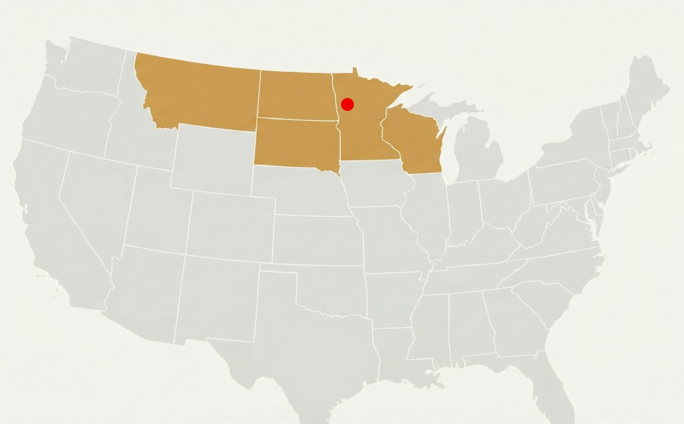
A major validation milestone for Replenish has been its licensing agreement with Farmers Union Enterprises (FUE), one of the largest agricultural cooperative networks in the United States. FUE’s network spans Minnesota, Montana, North Dakota, South Dakota and Wisconsin, providing access to more than 70 million acres of farmland. There is enormous potential to scale adoption if the technology performs as expected. Exhibit 1 below shows the site of Replenish’s first licensing facility in Crookston, Minnesota.
Exhibit 1: Farmers Union Enterprise Footprint
Source: Company Reports
Under the licensing structure, the initial facility is expected to produce 50,000 tonnes annually, with optionality to scale to 100,000 tonnes at continuous 24-hour production. During an initial transition period, Replenish will finance inventory working capital requirements, where it expects to realize margins of approximately 20-30% on combined FUE sales. Replenish is expected to earn royalties of approximately US$40-$60 per tonne, implying roughly US$2 million to US$3 million in annual revenue per facility once production reaches steady-state capacity.
Given the cash flow conversion efficiency of the licensing model at maturity, the majority of this revenue is expected to convert directly to cash flow, which could equate to approximately US$150,000 to US$225,000 in monthly cash flow.
Because the Beiseker facility is expected to bring the company to an EBITDA positive position at full capacity, this incremental licensing revenue represents direct accretive profit and cash flow to the Company’s bottom-line.
One often overlooked component of this licensing agreement is that it provides FUE with a right of first refusal (ROFR) to expand not just across its 70+ million-acre cooperative network, but the 300+ million acres of arable land in the continental USA.
For context, this initial agreement is for 50,000 tonnes. Each 50,000-tonne facility only covers 500,000 acres. With only 10% penetration (7 million acres) into FUE, Replenish could generate US$28 million to US$42 million in annual royalty payments. That could equate to potentially US$25.2 million to US$37.8 million in incremental annual cash flow.
If early deployments perform well, this structure could accelerate adoption across a large portion of the United States agricultural system. Over time, this creates a compounding growth dynamic, where acreage adoption drives facility expansion, and facility expansion drives further acreage adoption.
Expansion Pipeline: Multiple Facilities Already Identified
Beyond the Beiseker proof-of-concept facility and the initial Farmers Union deployment in the United States, Replenish has already identified several additional expansion opportunities that could significantly increase production capacity and accelerate acreage adoption. These opportunities span both licensed partner facilities and company-supported production sites, providing multiple avenues for growth.
MJ Ag Solutions – Canadian Licensing Agreement
Replenish has also entered into a smaller Canadian licensing agreement with MJ Ag Solutions, a Northern Alberta-based fertilizer distributor, which provides an early demonstration of the platform’s flexibility for regional operators.
The initial facility is expected to produce 10,000 tonnes annually, generating estimated royalties of $40-$60 per tonne. Initially, Replenish will finance inventory working capital requirements, where it expects to realize margins of approximately 20-30% on all MJ sales and royalties. At full production, this is expected to translate into approximately $400,000 to $600,000 of incremental annual licensing gross margin.
While smaller in scale than the Farmers Union deployment, MJ Ag provides access to a regional agricultural footprint estimated at up to 10 million acres in Northern Alberta and British Columbia, creating the potential for additional facilities over time if early results are positive.
DeBolt, Alberta
The DeBolt, Alberta project represents a fully permitted, shovel-ready facility designed to produce approximately 50,000 tonnes of Super KS annually, with optionality to scale to 100,000 tonnes at continuous 24-hour production.
The project is expected to secure a multi-million non-dilutive grant from Emissions Reduction Alberta (ERA), with the remaining capital expected to be funded through a combination of debt and equity financing. Replenish is having strategic discussions regarding possible funding and ownership models. At current market pricing ($550 to $650 per tonne), a facility of this scale could generate approximately $27.5 to $32.5 million in annual revenue, with 20-30%+ gross margins.
The facility is intended to increase production capacity within Western Canada, allowing Replenish to serve additional growers across Alberta and neighboring agricultural regions.
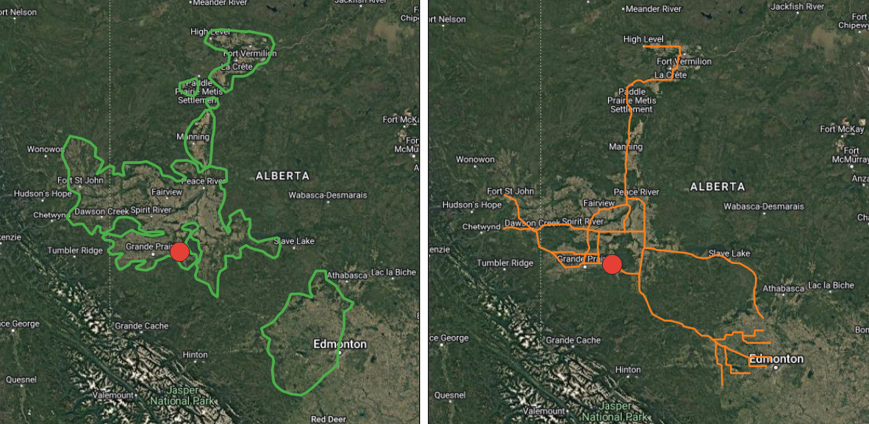
Exhibit 2: Total Area Market for Super KS Fertilizer Application
Source: Company Reports
The images above highlight the addressable market for Super KS application (left hand side with green lines), together with trucking corridors that extend distribution from Peace Country southward into the Westlock and Spruce Grove areas west of Edmonton (right hand side with orange lines). The red dot in both images represents the DeBolt facility. Given the volume of grain moving along this route, there appears to be a meaningful opportunity to utilize backhaul capacity, which could help reduce pellet transportation costs on shipments moving south.
Bethune, Saskatchewan
The Bethune site in Saskatchewan represents one of the most significant long-term production opportunities identified to date.
The site is a large, fully permitted industrial location capable of supporting substantial fertilizer production capacity (200,000 to 400,000 tonnes). Depending on market demand and partner participation, Bethune could potentially evolve into a major manufacturing hub for the Company’s technology and formulations.
Its location in Saskatchewan is particularly strategic, given the province’s importance as a major agricultural region and its proximity to both Canadian and U.S. farming markets.
When developed, Bethune could support multiple production lines and significant long-term output, providing the infrastructure needed to supply large acreage adoption across the Prairie region.
The Roadmap: From Validation to Platform Scale
Replenish has shifted from technology development toward commercial validation and scale. The growth strategy no longer relies on a single-site model; instead, it utilizes a multi-pronged approach designed to expand production capacity while maintaining capital efficiency. By combining a company-owned hub (Beiseker) to reach EBITDA positive with partner-funded licensed sites (FUE and MJ Ag) and large-scale expansion projects (DeBolt and Bethune), Replenish is building a distributed infrastructure platform.
This matters because the ‘proof-of-concept’ phase is now in the rearview mirror. Several key building blocks are already visible:
- Operations at Beiseker prove the Company can manufacture and sell product at commercial scale
- Flagship partnership with Farmers Union Enterprises provides third-party validation from a major U.S. agricultural network, creating a pathway to massive acreage adoption
- The licensing model allows the footprint to grow without requiring the Company to fund every facility itself, generating recurring, high-margin royalty revenue
Conclusion
The investment case is now straightforward and meaningfully de-risked. Replenish is moving beyond ‘interesting technology’ into a phase of disciplined execution. If management continues to ramp Beiseker toward breakeven and validates the licensing model through partner facilities, the business is positioned to evolve into a North American leader in regenerative fertilizer.
At this stage, the opportunity is less about near-term perfection and more about the Company’s ability to stitch together validation, capacity, and acreage. The early evidence suggests that it can. If that trajectory holds, Replenish represents one of the most differentiated small-cap ways to participate in the modernization of global agricultural inputs.
For More Research
Access more Replenish Nutrients Holding Corp. research HERE
Sign up for Sophic Capital’s reports HERE
Disclosures
Replenish Nutrients Holding Corp. [CSE: ERTH, OTC: VVIVF] has contracted Sophic Capital for capital markets advisory and investor relations services.
Disclaimers
The information and recommendations made available through our emails, newsletters, website and press releases (collectively referred to as the “Material”) by Sophic Capital Inc. (“Sophic” or “Company”) is for informational purposes only and shall not be used or construed as an offer to sell or be used as a solicitation of an offer to buy any services or securities. In accessing or consuming the Materials, you hereby acknowledge that any reliance upon any Materials shall be at your sole risk. In particular, none of the information provided in our monthly newsletter and emails or any other Material should be viewed as an invite, and/or induce or encourage any person to make any kind of investment decision. The recommendations and information provided in our Material are not tailored to the needs of particular persons and may not be appropriate for you depending on your financial position or investment goals or needs. You should apply your own judgment in making any use of the information provided in the Company’s Material, especially as the basis for any investment decisions. Securities or other investments referred to in the Materials may not be suitable for you and you should not make any kind of investment decision in relation to them without first obtaining independent investment advice from a qualified and registered investment advisor. You further agree that neither Sophic, its, directors, officers, shareholders, employees, affiliates consultants, and/or clients will be liable for any losses or liabilities that may be occasioned as a result of the information provided in any of the Material. By accessing Sophic’s website and signing up to receive the Company’s monthly newsletter or any other Material, you accept and agree to be bound by and comply with the terms and conditions set out herein. If you do not accept and agree to the terms, you should not use the Company’s website or accept the terms and conditions associated to the newsletter signup. Sophic is not registered as an adviser or dealer under the securities legislation of any jurisdiction of Canada or elsewhere and provides Material on behalf of its clients pursuant to an exemption from the registration requirements that is available in respect of generic advice. In no event will Sophic be responsible or liable to you or any other party for any damages of any kind arising out of or relating to the use of, misuse of and/or inability to use the Company’s website or Material. The information is directed only at persons resident in Canada. The Company’s Material or the information provided in the Material shall not in any form constitute as an offer or solicitation to anyone in the United States of America or any jurisdiction where such offer or solicitation is not authorized or to any person to whom it is unlawful to make such a solicitation. If you choose to access Sophic’s website and/or have signed up to receive the Company’s monthly newsletter or any other Material, you acknowledge that the information in the Material is intended for use by persons resident in Canada only. Sophic is not an investment advisor nor does it maintain any registrations as such, and Material provided by Sophic shall not be used to make investment decisions. Information provided in the Company’s Material is often opinionated and should be considered for information purposes only. No stock exchange or securities regulatory authority anywhere has approved or disapproved of the information contained herein. There is no express or implied solicitation to buy or sell securities. Sophic and/or its principals and employees may have positions in the stocks mentioned in the Company’s Material and may trade in the stocks mentioned in the Material. Do not consider buying or selling any stock without conducting your own due diligence and/or without obtaining independent investment advice from a qualified and registered investment advisor. The Company has not independently verified any of the data from third party sources referred to in the Material, including information provided by Sophic clients that are the subject of the report, or ascertained the underlying assumptions relied upon by such sources. The Company does not assume any responsibility for the accuracy or completeness of this information or for any failure by any such other persons to disclose events which may have occurred or may affect the significance or accuracy of any such information.
The Material may contain forward looking information. Forward-looking statements are frequently, but not always, identified by words such as “expects,” “anticipates,” “believes,” “intends,” “estimates,” “potential,” “possible,” “projects,” “plans,” and similar expressions, or statements that events, conditions or results “will,” “may,” “could,” or “should” occur or be achieved or their negatives or other comparable words and include, without limitation, statements regarding, projected revenue, income or earnings or other results of operations, strategy, plans, objectives, goals and targets, plans to increase market share or with respect to anticipated performance compared to competitors, product development and adoption by potential customers. These statements relate to future events and future performance. Forward-looking statements are based on opinions and assumptions as of the date made, and are subject to a variety of risks and other factors that could cause actual events/results to differ materially from these forward looking statements. There can be no assurance that such expectations will prove to be correct; these statements are no guarantee of future performance and involve known and unknown risks, uncertainties and other factors. Sophic provides no assurance as to future results, performance, or achievements and no representations are made that actual results achieved will be as indicated in the forward looking information. Nothing herein can be assumed or predicted, and you are strongly encouraged to learn more and seek independent advice before relying on any information presented.